
Zero Trust Architecture for MCP Security: Implementation Guide
Explore Zero Trust Architecture for MCP security, focusing on RBAC for superior access control and compliance in AI agent deployments.

Zero Trust Architecture for MCP Security: Implementation Guide
Zero Trust Architecture (ZTA) for MCP security starts with assuming every request is hostile, requiring continuous identity verification and policy checks. Role-Based Access Control (RBAC) provides the predictable enforcement and auditability needed for enterprise AI deployments, outperforming attribute-based models that become complex at scale.
At a Glance
• Zero Trust eliminates implicit trust - Every MCP server request requires continuous verification regardless of network location, preventing data exfiltration when agents access private data
• RBAC delivers 85% accuracy in query filtering for AI workloads, providing faster audit completion compared to ABAC's complex attribute evaluation
• 91% of organizations worry about VPN security - ZTNA replaces legacy VPNs with direct, one-to-one connections that never expose apps to public internet
• Policy-as-code with OPA enables version-controlled, testable access controls across MCP deployments used by Netflix and Capital One
• Identity Control Plane unifies user, service, and machine identities into a coherent framework for dynamic access control
Data exfiltration in agentic stacks is no longer a hypothetical risk. When AI agents access private data, process untrusted content, and communicate externally, a single misconfiguration can expose your entire enterprise. Zero Trust Architecture combined with Role-Based Access Control delivers the fastest path to least-privilege enforcement across your MCP deployments.
Why Does Zero Trust Architecture Matter for MCP Deployments?
What is Zero Trust Architecture for MCP security?
Zero Trust Architecture assumes every request to your MCP server may be hostile. Instead of trusting network location, ZTA requires continuous identity verification and policy checks on every tool call and data read.
As NIST defines it, "Zero trust (ZT) is the term for an evolving set of cybersecurity paradigms that move defenses from static, network-based perimeters to focus on users, assets, and resources." This shift is critical for MCP environments where agents interact with distributed data sources across hybrid infrastructures.
The MCP attack surface is expanding rapidly. Security researcher Simon Willison identified a dangerous combination of capabilities that leads to data theft in AI systems:
- Access to your private data
- Exposure to untrusted content
- The ability to externally communicate
When all three conditions exist in an MCP deployment without proper controls, you have created a perfect storm for exfiltration.
CISA's Zero Trust Maturity Model provides the operative framework: "Zero trust provides a collection of concepts and ideas designed to minimize uncertainty in enforcing accurate, least privilege per-request access decisions in information systems and services in the face of a network viewed as compromised."
Key takeaway: Implementing robust authorization in your MCP server mitigates these risks by enforcing least-privilege access on every tool invocation.
RBAC vs. ABAC: Which Control Model Fits AI Agents?
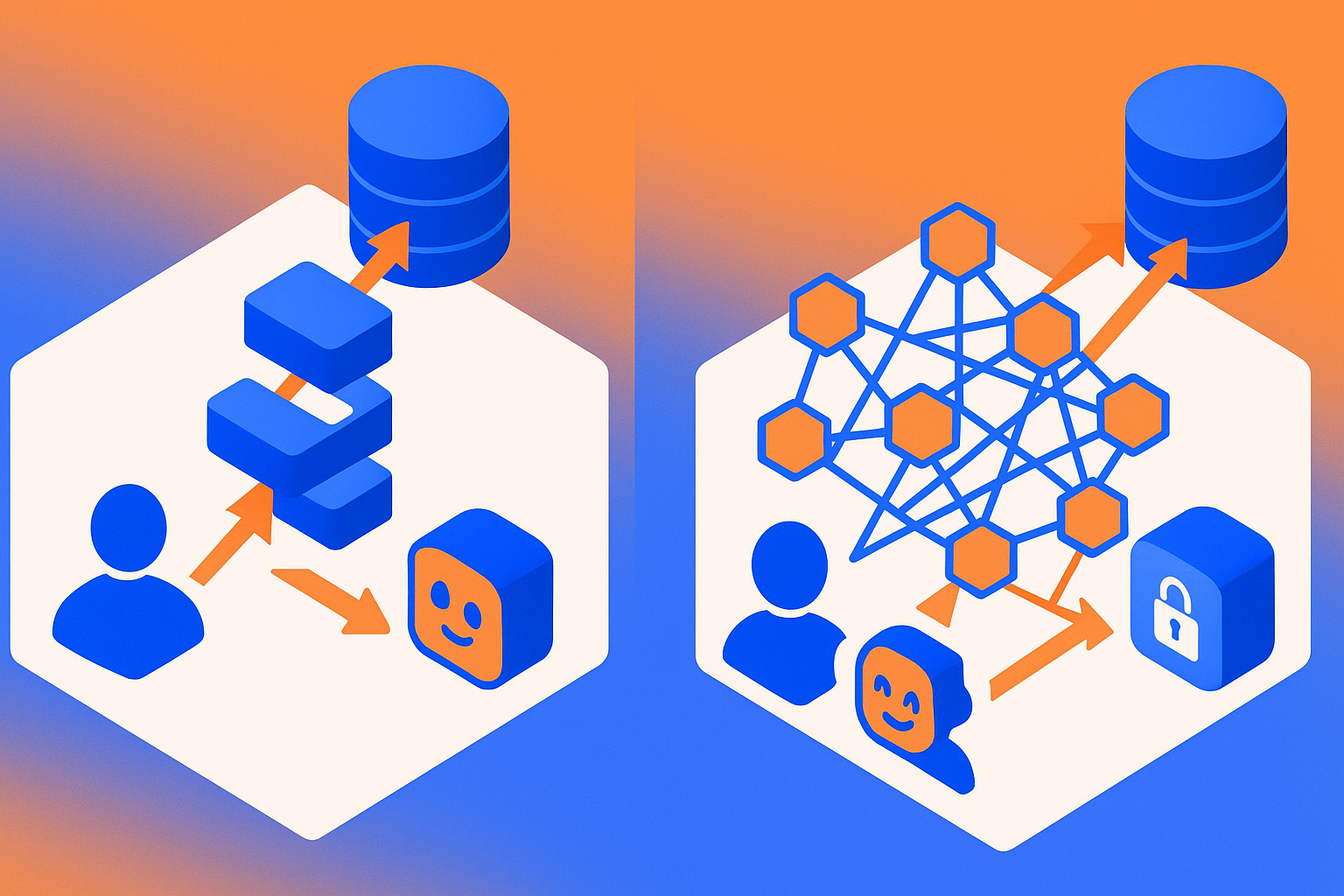
Why does RBAC outperform ABAC inside an MCP server?
Attribute-based models offer flexibility, but they sprawl. Role-Based Access Control slashes blast-radius by pinning fixed duties to least-privilege policies. Fewer moving parts mean faster audits and compliance sign-offs.
The Federal Zero Trust Data Security Guide defines the distinction clearly: "Role-Based Access Control (RBAC) defines access privileges based on job roles and responsibilities."
ABAC, by contrast, evaluates attributes associated with subjects, objects, and environmental conditions against complex policy rules. According to NIST SP 800-162, "ABAC is a logical access control methodology where authorization to perform a set of operations is determined by evaluating attributes associated with the subject, object, requested operations, and, in some cases, environment conditions against policy, rules, or relationships."
| Factor | RBAC | ABAC |
|---|---|---|
| Policy complexity | Low | High |
| Audit speed | Fast | Slower |
| Role explosion risk | Moderate | Low |
| AI agent fit | Strong | Requires tuning |
Teleport's documentation reinforces this: "Teleport's role-based access control (RBAC) enables you to set fine-grained policies for who can perform certain actions against specific resources."
For AI workloads processing sensitive data, RBAC delivers predictable enforcement. ABAC's flexibility becomes a liability when you need immediate auditability for SOC2 or GDPR compliance.
Key takeaway: RBAC provides the auditability and predictability that AI agent deployments require for enterprise compliance.
Implementing RBAC at Scale With OPA, MCPermit, and Teleport
Policy-as-code transforms access control from static configurations into version-controlled, testable artifacts. Three tools stand out for MCP deployments.
Open Policy Agent (OPA)
Open Policy Agent is an open source, general-purpose policy engine that unifies policy enforcement across the stack.
OPA provides a high-level declarative language called Rego that lets you specify policy as code. Companies like Netflix, Capital One, and Atlassian use OPA to enforce policies across their cloud-native environments. OPA decouples policy decision-making from enforcement, enabling flexible and scalable policy management across microservices, Kubernetes, CI/CD pipelines, and API gateways.
MCPermit
MCPermit is a comprehensive permissions layer designed specifically for MCP servers. According to Permit.io's documentation, it "enables organizations to implement fine-grained access control for their AI agents while maintaining security and compliance requirements."
Core capabilities include:
- Fine-grained ReBAC: Leverages Permit.io, OPA, and OPAL for relationship-based access control
- Multi-stage security: Implements a five-stage authentication and authorization process
- Advanced monitoring: Provides comprehensive auditing and anomaly detection
- Human oversight: Enables human-in-the-loop approvals for critical decisions
Teleport Session Brokering
Teleport roles are dynamic resources that allow or deny access to infrastructure resources and API operations. All resources enrolled in your Teleport cluster have labels, which are key-value pairs such as env: dev that enable granular access control.
Teleport's role templating syntax specifies user permissions based on data from identity providers or the Teleport Auth Service backend, enabling context-aware session brokering.
How Does ZTNA Replace Legacy VPNs?
Zero Trust Network Access eliminates the network-centric trust model that makes VPNs vulnerable.
The statistics are sobering: 91% of organizations are concerned that VPNs compromise their security. In 2023-2024, 56% of organizations suffered one or more VPN-related attacks, with 54% of those breaches involving lateral movement.
ZTNA brokers direct, one-to-one connections between authorized users and specific apps. Unlike VPNs, users never access the corporate network, and apps are never exposed to the public internet.
The State of Oklahoma reported that "In just two days ... access to private applications was up to six times faster than it was with VPN."
Cloudflare Access exemplifies the ZTNA approach: it secures applications without a VPN, integrates with identity providers to enforce user-specific access policies, and logs every request to provide detailed audit trails. Deployment happens in minutes without changing existing infrastructure.
What Is the Identity Control Plane in ZTA?
Identity is the foundational control vector in modern Zero Trust infrastructure. The Identity Control Plane unifies user, service, and machine identities into a coherent framework.
As the Identity Control Plane research paper explains, the ICP is "a unifying architectural pattern that integrates SPIFFE-based workload identity, OIDC/SAML user identity, and scoped automation tokens." This integration enables dynamic, intent-aware access control using attribute-based policy engines like OPA and Cedar.
Microsoft's Zero Trust guidance reinforces this: "Before an identity attempts to access a resource, organizations must verify the identity with strong authentication, ensure access is compliant and typical for that identity, and follow least privilege access principles."
The CMS Zero Trust Maturity Identity Pillar states definitively: "The ability to identify every user and entity requesting system access is foundational to the concept of zero trust."
A mature Identity Control Plane delivers:
- Continuous identity validation with phishing-resistant MFA
- Secure integration of identity stores across partners and environments
- Real-time identity risk assessment based on dynamic rules
- Automated just-in-time and just-enough access tailored to individual actions
Step-by-Step Rollout Roadmap for RBAC-First ZTA
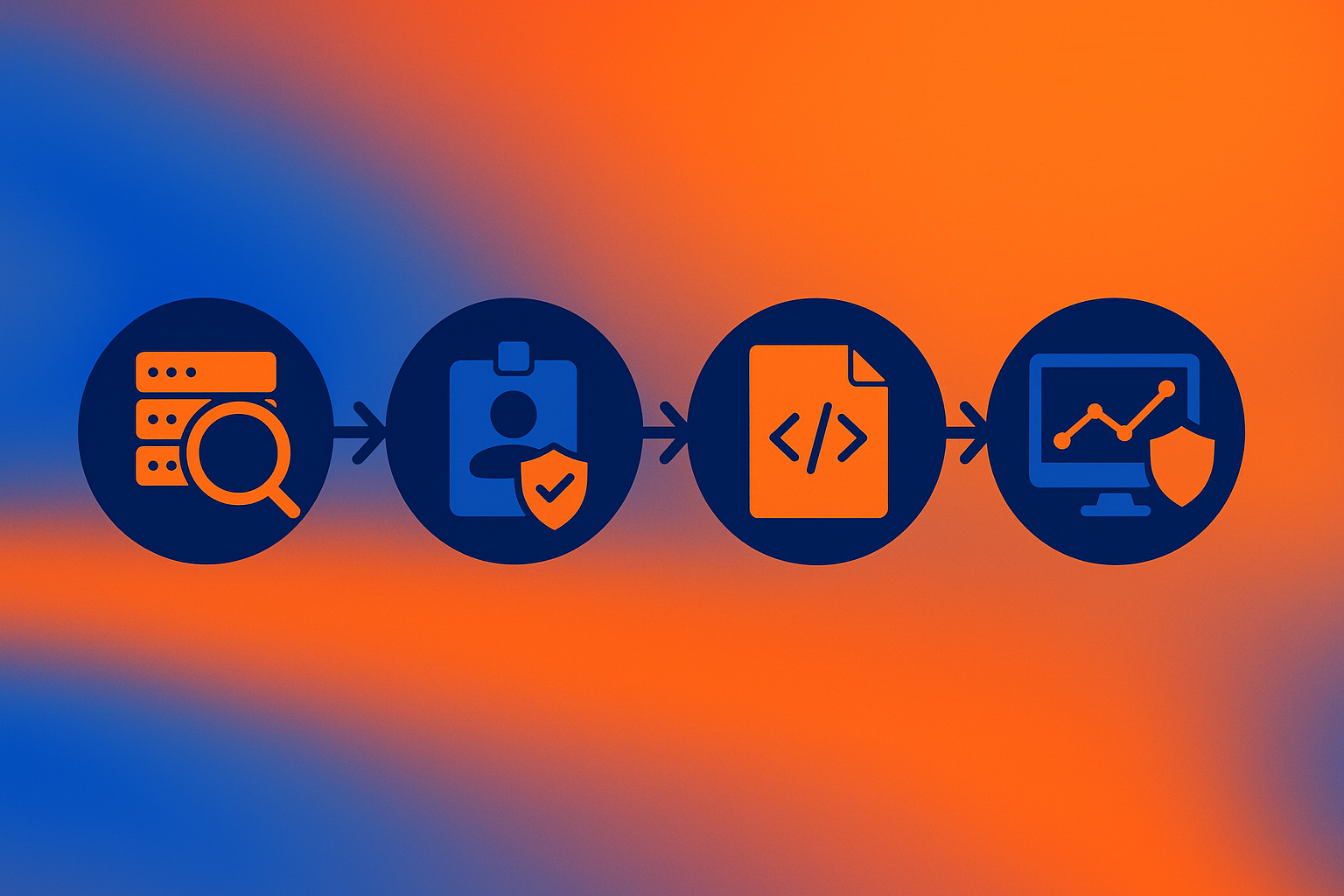
The path to Zero Trust is incremental. NIST SP 1800-35 documents 19 example implementations developed with 24 technology partners. Use this phased approach.
Phase 1: Assessment
- Inventory all MCP servers and connected data sources
- Map current access patterns and permissions
- Identify high-value resources requiring immediate protection
- Document existing identity infrastructure
The NCCoE guide notes that organizations should "plan how to evolve their existing enterprise environments to ZTA, starting with an assessment of their current resources, strengths, and weaknesses."
Phase 2: Role Definition
- Define roles based on job functions, not individual users
- Apply least-privilege principles to each role
- Create role hierarchies where appropriate
- Document role-to-permission mappings
Research shows that "Role-based Access Control (RBAC) became a foundational standard by simplifying administration through the association of permissions with roles rather than individual users."
Phase 3: Policy Implementation
- Deploy OPA or equivalent policy engine
- Write policies as code in version control
- Test policies against expected access patterns
- Implement MCPermit for MCP-specific controls
Phase 4: Monitoring and Iteration
Experimental results from enterprise RBAC implementations show 85% accuracy and 89% F1-score in query filtering when properly configured.
| Metric | Target | Measurement Method |
|---|---|---|
| Policy violations | <1% | Audit log analysis |
| Access request latency | <100ms | APM monitoring |
| Role coverage | >95% | Identity inventory |
| Audit completion time | <24 hours | Compliance tracking |
Common Pitfalls and How to Monitor Success
CISA's updated Zero Trust Maturity Model introduces an "Initial" maturity stage to help organizations identify where they stand across five pillars: Identity, Devices, Network, Data, and Applications and Workloads.
Common Mis-configurations
- Overly permissive default roles: Start with deny-all, add permissions explicitly
- Stale role assignments: Implement automated access reviews
- Missing audit trails: Log every access decision, not just denials
- Static policies: Update policies based on threat intelligence
Gartner's Critical Capabilities report notes that "Innovation in AM tools is being observed in such capabilities as journey-time orchestration, delegated administration, identity verification, and identity threat detection and response."
Monitoring KPIs
- Unauthorized access attempts: Track and alert on policy violations
- Role sprawl: Monitor for excessive role creation
- Permission drift: Detect when actual access diverges from policy
- Response time: Measure time from detection to remediation
The SLSA framework provides additional guidance: "The SLSA Build track mitigates these threats when the consumer verifies artifacts against expectations, confirming that the artifact they received was built in the expected manner."
Zero Trust Wins When RBAC Leads
Implementing Zero Trust Architecture for MCP security is not optional for enterprises handling sensitive data. RBAC provides the auditability, predictability, and compliance alignment that ABAC struggles to deliver at scale.
The NIST guide summarizes it well: the effort "summarizes best practices and lessons learned from the implementations and integrations to make it easier and more cost-effective to implement ZTA."
Action: Deploy a single-workflow MCP server with RBAC-first policies today. Start with OPA for policy-as-code, implement MCPermit for MCP-specific controls, and monitor with protocol-aware observability.
Golf provides the infrastructure to build secure MCP deployments with robust access controls. If you're a VP of Engineering or AppSec lead facing data leakage risks in your agentic stack, Golf's platform delivers the RBAC capabilities you need to unblock your AI roadmap while maintaining compliance.
Frequently Asked Questions
What is Zero Trust Architecture in MCP security?
Zero Trust Architecture (ZTA) in MCP security assumes every request may be hostile, requiring continuous identity verification and policy checks on every tool call and data read, moving defenses from static, network-based perimeters to focus on users, assets, and resources.
Why is RBAC preferred over ABAC for MCP servers?
RBAC is preferred over ABAC for MCP servers because it simplifies administration by associating permissions with roles rather than individual users, providing predictable enforcement and faster audits, which is crucial for compliance in AI agent deployments.
How does Zero Trust Network Access (ZTNA) differ from traditional VPNs?
ZTNA differs from traditional VPNs by eliminating the network-centric trust model, brokering direct connections between authorized users and specific apps without exposing the corporate network or apps to the public internet, thus enhancing security.
What tools are recommended for implementing RBAC in MCP environments?
Recommended tools for implementing RBAC in MCP environments include Open Policy Agent (OPA) for policy-as-code, MCPermit for fine-grained access control, and Teleport for dynamic session brokering and granular access control.
How does Golf support secure MCP deployments?
Golf provides the infrastructure to build secure MCP deployments with robust access controls, offering RBAC capabilities to unblock AI roadmaps while maintaining compliance, ideal for VPs of Engineering or AppSec leads facing data leakage risks.
Sources
- https://www.nist.gov/publications/guide-attribute-based-access-control-abac-definition-and-considerations-1
- https://authzed.com/docs/mcp
- https://www.cisa.gov/sites/default/files/2023-04/CISA_Zero_Trust_Maturity_Model_Version_2_508c.pdf
- https://resources.data.gov/assets/documents/Zero-Trust-DataSecurityGuide_RevisedMay2025_CIO.govVersion.pdf
- https://goteleport.com/docs/zero-trust-access/rbac-get-started
- https://www.openpolicyagent.org/
- https://docs.permit.io/mcp-permissions/
- https://www.zscaler.com/products/zscaler-private-access
- https://www.zscaler.com/products-and-solutions/zero-trust-network-access-ztna
- https://www.cloudflare.com/zero-trust/products/access/
- https://arxiv.org/html/2504.17759v1
- https://learn.microsoft.com/en-us/security/zero-trust/deploy/identity
- https://www.cms.gov/tra/ZeroTrust/ZT_0020_ZTMM_Identity_Pillar.htm
- https://www.nccoe.nist.gov/sites/default/files/2024-11/zta-nist-sp-1800-35-ipd.pdf
- https://arxiv.org/abs/2506.19984
- https://arxiv.org/abs/2505.16234
- https://www.cisa.gov/news-events/news/cisa-releases-updated-zero-trust-maturity-model
- https://www.gartner.com/en/documents/4953231
- https://slsa.dev/spec/v1.1/threats
- https://csrc.nist.gov/pubs/sp/1800/35/final