
Best Centralized MCP Management Platforms: 2025 Comparison
Explore top centralized MCP management platforms of 2025, focusing on security, observability, and deployment for enterprise AI stacks.

Best Centralized MCP Management Platforms: 2025 Comparison
Centralized MCP management platforms provide the essential infrastructure for connecting AI agents to external tools at scale. Leading solutions like TrueFoundry, MintMCP, and Lunar.dev offer enterprise-grade security with SOC2 and HIPAA compliance, while enabling deployment in minutes versus weeks of traditional Kubernetes configuration.
At a Glance
- The Model Context Protocol (MCP) has become the standard for AI agent tool calls, introduced by Anthropic in late 2024
- Top platforms include TrueFoundry (unified LLM/MCP management), MintMCP (rapid deployment), and Lunar.dev MCPX (governance depth)
- Security features vary significantly, with leaders offering Zero Trust architecture and OAuth 2.0 support
- Performance benchmarks show sub-3ms internal latency for enterprise workloads
- Compliance certifications include SOC2 Type II, HIPAA, and GDPR support across major platforms
- Observability integration with Prometheus-compatible metrics enables seamless monitoring
Centralized MCP management platforms sit at the heart of every compliant GenAI rollout in 2025. As AI agents multiply across enterprise stacks, the Model Context Protocol (MCP) has become the standard for connecting large-language models to external tools. Regulated enterprises can no longer treat gateways as optional plumbing.
This guide compares the leading MCP gateways, evaluates their security and observability features, and provides a decision framework for selecting the right platform for your stack.
Why Enterprises Need Centralized MCP Management in 2025
The Model Context Protocol (MCP) is an open specification for connecting large language model clients to external tools and resources. Introduced by Anthropic in late 2024, it provides a standard for agent tool calls.
Three forces are driving centralized adoption:
- Agentic growth: AI agents now interact with dozens of MCP servers per workflow. Point-to-point configurations collapse under scale.
- Security pressure: AppSec leads block internal AI roadmaps due to data leakage risks or compliance fears around SOC2 and GDPR.
- Governance mandates: Audit trails, role-based access, and credential management require a single control plane.
An MCP gateway functions as a centralized control plane to securely, reliably, and idiomatically connect AI agents to the growing ecosystem of MCP servers. Without one, security policies fragment across teams, and compliance failures become inevitable.
Key takeaway: Centralized MCP management is no longer optional for regulated enterprises deploying agentic AI at scale.
What Evaluation Criteria Define a Great MCP Gateway?
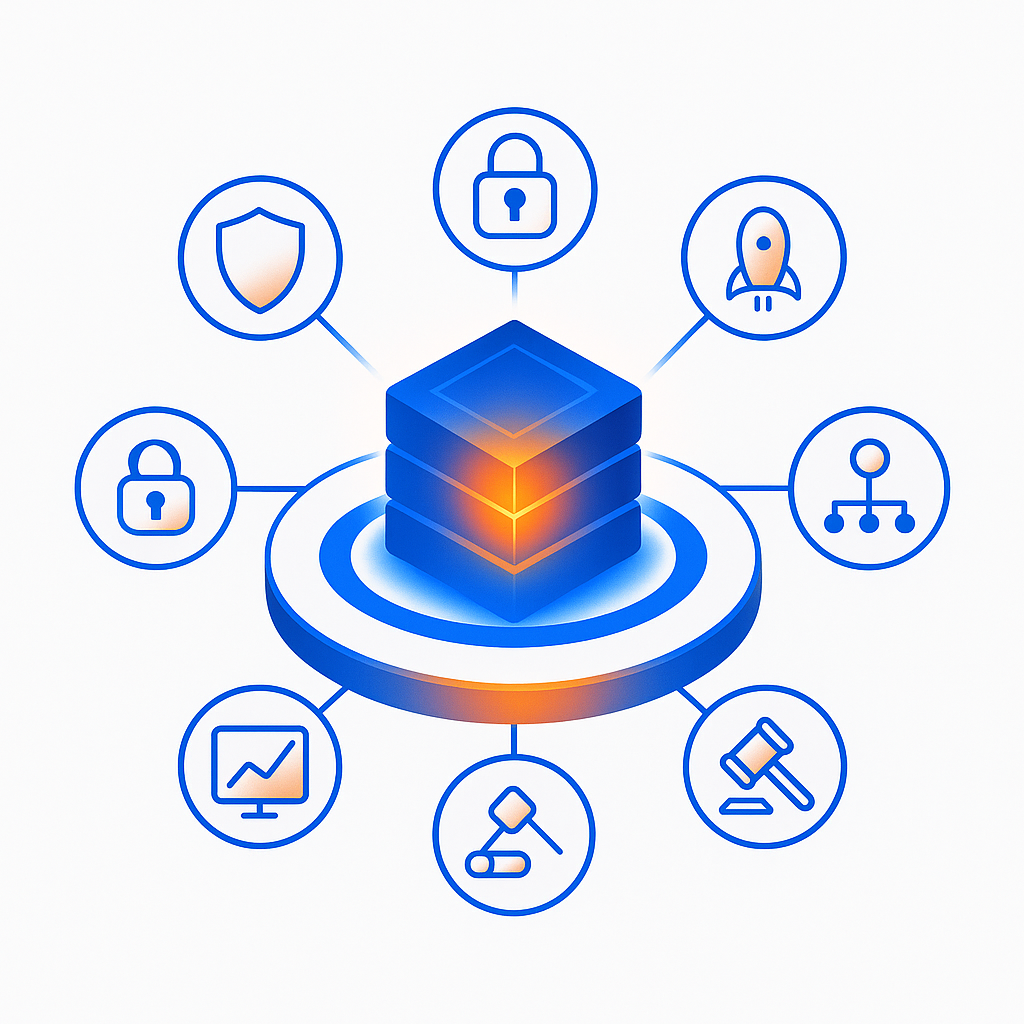
Buyers must score gateways across six dimensions:
| Criterion | What to Evaluate |
|---|---|
| Security | Zero Trust architecture, OAuth 2.1 support, credential management |
| Authentication | API keys, OAuth, SAML, SSO integration |
| Latency | Sub-5ms overhead under enterprise workloads |
| Deployment | One-click setup vs. weeks of Kubernetes configuration |
| Governance | Audit trails, RBAC, tool-level access control |
| Observability | Prometheus metrics, OpenTelemetry hooks, real-time dashboards |
Look for platforms implementing Zero Trust Architecture where authentication happens at the edge without storing credentials. The gateway should never automatically execute tool calls. Instead, it should provide APIs for explicit tool execution, ensuring human oversight for potentially dangerous operations.
Enterprise teams increasingly demand rapid deployment. Some platforms enable deployment in minutes with one-click infrastructure versus platforms requiring weeks of Kubernetes configuration.
Gateways should integrate with popular tools like Prometheus and Grafana, allowing seamless integration into existing workflows. Look for OpenTelemetry-compliant metrics and logging for all requests.
Which Centralized MCP Platforms Stand Out in 2025?
The market has consolidated around several categories: enterprise-focused commercial platforms, open-source options, and API management vendors adding MCP capabilities.
| Platform | Primary Strength | Deployment Model | Best For |
|---|---|---|---|
| TrueFoundry AI Gateway | Unified LLM + MCP management | SaaS or on-premise | Teams managing both models and tools |
| MintMCP Gateway | Rapid deployment, compliance | SaaS | Fast-moving regulated enterprises |
| Lunar.dev MCPX | Governance and audit depth | Private/VPC options | Security-first organizations |
| Tyk AI Studio | API-to-MCP conversion | Self-hosted or cloud | Teams with existing API infrastructure |
| Docker MCP Gateway | Container-native orchestration | Open source | Developer-centric organizations |
TrueFoundry AI Gateway
TrueFoundry extends its AI infrastructure platform to include an MCP gateway. The AI Gateway is the proxy layer that sits between your applications and LLM providers and MCP servers, offering a unified API interface.
Strengths:
- Call 1000+ LLMs using a single endpoint with unified API interface
- Sub-3ms internal latency even under enterprise-scale workloads
- 99.99% uptime with over 10 billion requests processed monthly
- Compliance with SOC 2, HIPAA, and GDPR standards
Considerations:
- Requires Kubernetes expertise for on-premise deployments
- Primarily optimized for teams already managing LLM infrastructure
As one enterprise user noted: "TrueFoundry's AI Gateway gave us a unified layer to manage model access, routing, guardrails, and cost controls across teams."
MintMCP Gateway
MintMCP positions itself as the rapid-deployment option for regulated enterprises. The platform is SOC2 Type II certified and GDPR supported through complete audit trails and data residency controls.
Strengths:
- Deploys in minutes through one-click infrastructure with pre-configured policies
- Native integration with Claude Desktop, ChatGPT, Cursor IDE, and 10+ AI clients
- Automatic OAuth protection transforms local STDIO servers into production-ready services
- Complete audit trails for SOC2, HIPAA, and GDPR compliance
Considerations:
- Newer entrant with less extensive documentation
- Enterprise pricing requires consultation
Lunar.dev MCPX
Lunar.dev's MCPX focuses on governance and audit depth for security-first organizations. The platform records every invocation in an immutable audit trail and exposes real-time metrics.
Strengths:
- ACLs for defining global, service-level, or tool-level access
- Prometheus-compatible metrics including
tool_call_duration_mswith labels for tool name, error state, calling agent, and model - Private deployment and VPC options for sensitive environments
- API key and OAuth authentication support
Considerations:
- Less focus on rapid deployment compared to MintMCP
- Primarily targets enterprises with mature security operations
Tyk AI Studio
Tyk brings MCP capabilities to a mature API gateway platform. The AI Studio extends the MCP model for enterprise deployments with remote MCP catalogues, secure local server deployment, and standardized protocols.
Strengths:
- Transform OpenAPI specs into AI-compatible tools using the MCP standard
- Built-in access control and security for controlling which endpoints are exposed
- Comprehensive analytics system tracking cost, usage, and performance
- Multi-vendor support for OpenAI, Anthropic, Mistral, and more
Considerations:
- Best suited for teams with existing API management infrastructure
- Analytics data collected asynchronously to minimize latency impact
How Do Gateways Stack Up on Security & Compliance?
Security is the primary driver for centralized MCP adoption. Gateways differ significantly in their authentication models and compliance readiness.
Authentication Models
| Platform | Auth Methods | Zero Trust | Credential Storage |
|---|---|---|---|
| TrueFoundry | OAuth, API keys, RBAC | Partial | Vault integration |
| MintMCP | OAuth 2.0, SAML, SSO | Yes | No permanent storage |
| Lunar.dev | API key, OAuth | Yes | Configurable |
| Bifrost | Bearer, API keys, custom headers | Yes | Edge-only, never cached |
Bifrost exemplifies the Zero Trust approach: authentication happens at the edge, the platform never stores or caches authentication credentials, and each request is authenticated independently.
Compliance Certifications
- SOC2 Type II: MintMCP, TrueFoundry
- HIPAA: MintMCP, TrueFoundry
- GDPR: MintMCP, TrueFoundry, Lunar.dev
- FIPS 140-2: Traefik Hub API Gateway
Traefik Hub offers advanced authentication methods including JWT, OAuth 2.1, OpenID Connect, and LDAP, along with native Coraza Web Application Firewall protection.
Audit Trail Depth
Lunar.dev and Tyk provide the deepest audit capabilities. Tyk's analytics system tracks per LLM request data including timestamp, user ID, model name, token counts, calculated cost, latency, and success/error status.
Operational Metrics & Observability: What Should You Measure?
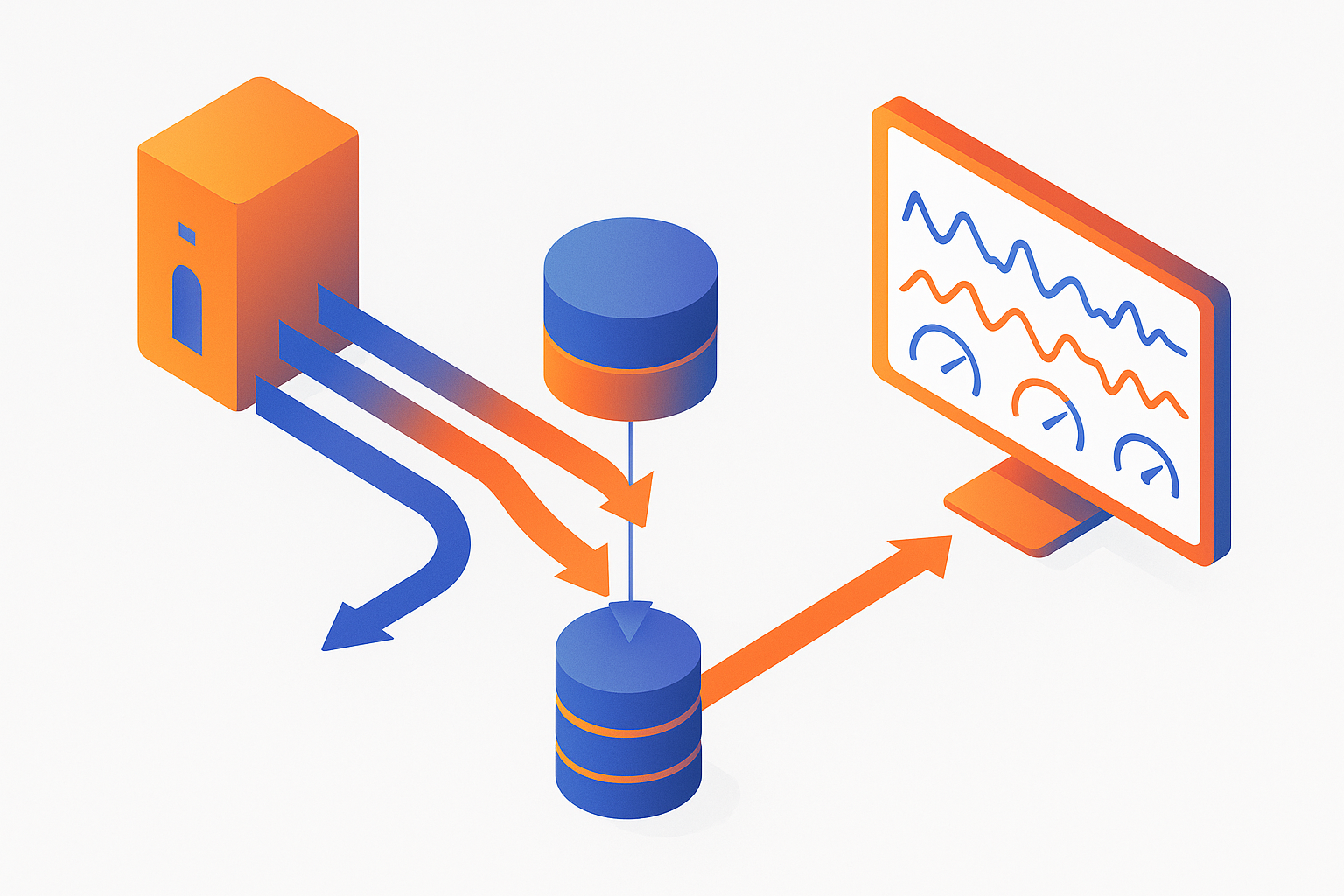
"Observability platforms are fundamentally changing how organizations manage system health, driven by innovations in analytics, cost optimization, and the emergence of AI observability." The shift toward protocol-aware observability requires new metrics.
Essential Metrics
Latency:
- TrueFoundry: Sub-3ms internal latency
- TrueFoundry Gateway overhead: Typically less than 5ms
Throughput:
- TrueFoundry: 10B+ requests processed monthly
Cost:
- TrueFoundry: 30% average cost optimization
OpenTelemetry Integration
Leading platforms provide OpenTelemetry-compliant metrics and logging for all requests. This enables integration with existing monitoring stacks without vendor lock-in.
TrueFoundry's AI Gateway allows teams to monitor token usage, latency, error rates, and request volumes across entire systems. This visibility is critical for cost management and performance optimization.
What to Track
- Tool call duration by agent, model, and error state
- Token consumption across teams and applications
- Error rates per MCP server
- Cost per request for budget enforcement
- Authentication failures for security monitoring
How to Choose the Right Gateway for Your Stack
Selection depends on your organization's maturity, existing infrastructure, and primary pain points.
Step 1: Assess Current State
Identify whether your bottleneck is security, deployment speed, or governance. WSO2 allows you to create, discover, and manage MCP servers with a centralized control plane through either open-source or SaaS options.
Step 2: Evaluate Deployment Requirements
Enterprise case studies show significant variance in setup time. Carrier Global automated account creation and setup, cutting provisioning time from 3 days to just minutes. Look for similar automation capabilities.
Step 3: Match to Infrastructure
Organizations with existing Kubernetes expertise may prefer TrueFoundry or Docker's open-source gateway. Teams prioritizing rapid deployment should evaluate MintMCP's one-click infrastructure.
Step 4: Verify Compliance Requirements
Map your regulatory requirements to platform certifications. Healthcare organizations require HIPAA support. Financial services need SOC2 Type II.
Step 5: Test Observability Integration
Confirm the platform integrates with your existing monitoring stack. Prometheus and Grafana compatibility is essential for most enterprise environments.
Recommendation Matrix
| If You Need... | Consider... |
|---|---|
| Unified LLM + MCP management | TrueFoundry AI Gateway |
| Fastest time to production | MintMCP Gateway |
| Deepest governance and audit | Lunar.dev MCPX |
| API-first with existing infrastructure | Tyk AI Studio |
| Open-source, container-native | Docker MCP Gateway |
Conclusion: Centralize Now or Pay Later
The rise of MCP has given AI agents a standardized way to interact with external tools. But standardization without centralization creates governance chaos.
Enterprise AI deployments increasingly require a centralized control plane to securely, reliably, and idiomatically connect AI agents to MCP servers. Without it, security policies fragment, compliance failures multiply, and observability gaps widen.
Action: Evaluate your current MCP architecture against the criteria outlined above. If you lack centralized authentication, audit trails, or observability, prioritize gateway adoption before scaling agentic deployments.
For teams building internal MCP infrastructure, Golf provides the protocol-aware observability and governance controls that regulated enterprises require. Deploy a single-workflow MCP server today and consolidate your agentic stack before complexity compounds.
Frequently Asked Questions
What is the Model Context Protocol (MCP)?
The Model Context Protocol (MCP) is an open specification introduced by Anthropic in 2024 for connecting large language model clients to external tools and resources, providing a standard for agent tool calls.
Why is centralized MCP management important for enterprises in 2025?
Centralized MCP management is crucial for enterprises to handle agentic growth, meet security and compliance requirements, and maintain governance mandates like audit trails and role-based access control.
What are the key evaluation criteria for MCP gateways?
Key criteria include security features like Zero Trust architecture, authentication methods, latency, deployment ease, governance capabilities, and observability tools such as Prometheus metrics and OpenTelemetry hooks.
Which MCP platforms are recommended for different needs?
TrueFoundry AI Gateway is ideal for unified LLM and MCP management, MintMCP Gateway for rapid deployment, Lunar.dev MCPX for governance, Tyk AI Studio for API-first teams, and Docker MCP Gateway for open-source solutions.
How does Golf support enterprises in building MCP infrastructure?
Golf provides protocol-aware observability and governance controls essential for regulated enterprises, helping them deploy single-workflow MCP servers and consolidate their agentic stacks.
Sources
- https://www.mintmcp.com/blog/truefoundry-alternatives
- https://www.lunar.dev/post/best-mcp-gateways-of-2025-why-lunar-dev-leads-the-pack
- https://docs.getbifrost.ai/enterprise/mcp-with-fa
- https://www.truefoundry.com/ai-gateway
- https://developers.openai.com/apps-sdk/concepts/mcp-server/
- https://www.moesif.com/blog/monitoring/model-context-protocol/Comparing-MCP-Model-Context-Protocol-Gateways/
- https://docs.getbifrost.ai/features/mcp
- https://docs.getbifrost.ai/features/observability
- https://truefoundry.mintlify.app/
- https://www.mintmcp.com/blog/lasso-security-with-mcp
- https://tyk.io/docs/ai-management/mcps/overview
- https://tyk.io/docs/ai-management/mcps/api-to-mcp
- https://tyk.io/docs/ai-management/ai-studio/analytics
- https://tyk.io/tyk-ai-studio/
- https://doc.traefik.io/traefik-hub/api-gateway/intro
- https://www.gartner.com/en/documents/6201044
- https://aws.amazon.com/solutions/case-studies/carrier-cloud-wan-case-study/